Watercolour or Gouache: Two Different Ways to Build an Image
Watercolour or gouache changes how you layer, revise, and use paper in a small study; compare their strengths before choosing a subject and palette.
Watercolour or gouache is a choice about how a small study will change as you paint. With watercolour, light usually comes from the paper showing through transparent layers; with gouache, opaque paint can cover parts of the surface and establish new shapes. Neither method is simply the delicate one or the forgiving one. Each asks you to plan revisions differently.
For a study of a pear, a folded cloth, or a houseplant, consider how much you want to preserve the paper, how often you expect to adjust a mark, and whether layered color should remain see-through. The numbered differences below are practical decisions, not rules about which paint is more serious.
What changes when you layer watercolour or gouache?
- Watercolour builds color through transparency. A dried wash lets the paper and earlier paint remain visible beneath later color. This can make a shadow feel like a veil laid over the object rather than a separate block of pigment. The effect suits a study where the white of the paper is part of the light, such as a pale mug beside a window.
- Gouache builds color by covering. Its opaque layers can conceal an earlier passage when applied with enough body. That makes it easier to shift a silhouette or replace a color area without leaving every previous decision visible. The tradeoff is that a newly covered patch may look distinctly painted over if its edges, thickness, or color differ from the surrounding surface.
- Layer order matters in both, but for different reasons. In watercolour, a later wash can tint what lies beneath while preserving its contours. In gouache, a later passage can redraw those contours by obscuring them. Think of the difference as writing on tracing paper versus placing a new paper cutout over an old one: the first lets earlier marks participate; the second can replace them.
How much revision do you want?
- Watercolour favors revisions made before the wash. A light pencil drawing and a plan for the brightest paper areas can prevent awkward attempts to recover them later. Some marks can be softened or lifted, depending on the paper, pigment, and how dry or settled the paint is, but lifting is not the same as restoring untouched paper.
- Gouache permits more visible repainting. If a leaf looks too broad, a background-colored passage can narrow it, then a new edge can be painted over the correction. This is useful when the study is exploratory. It still takes judgment: repeated wet scrubbing can disturb lower layers, and a correction may need to be integrated into nearby shapes rather than left as a conspicuous patch.
- Choose the kind of uncertainty you can tolerate. Watercolour asks you to accept that some decisions remain in the image, even when softened. Gouache lets you revise more directly, but every cover-up becomes another surface decision. If you enjoy seeing a painting accumulate its history, watercolour may suit you; if you want to redraw the image as you go, gouache may feel less restrictive.
When should the paper stay visible?
- Keep paper visible when its brightness should do real work. Watercolour is a natural option for a study built around reflected light, pale petals, or a thin shadow across a light tabletop. Leaving selected areas unpainted can create crisp highlights without adding white pigment. It also means the paper itself becomes part of the color, so its tone and texture are not neutral background details.
- Use gouache when paper is a ground, not a highlight plan. Opaque paint can cover the sheet with an overall color and then place lighter forms on top. This helps if you want a colored background or want the object’s pale areas to be painted shapes rather than bare paper. The surface remains relevant, but it need not supply every light.
- Let the support help decide. Watercolour paper is made to manage watery washes, while a smoother or differently prepared surface can change how gouache moves and covers. A rough texture may break a brush mark into small interruptions; a smooth one can make edges easier to control. Check the paint and paper labels and manufacturer guidance for compatibility, since surface preparation and suitable supports vary.
Which paint suits a small personal study?
- Choose watercolour for a study organized around light and transparent color. A simple subject with a clear light source gives you a reason to preserve paper and let washes overlap. Limit the drawing to the main silhouette and a few internal boundaries, then let successive transparent layers describe the form. This approach is less suited to frequent, substantial redesigns.
- Choose gouache for a study organized around shape and revision. It can help when the subject has distinct color areas, when the background needs to be painted in, or when you expect to adjust proportions. Begin with broad shapes and refine their boundaries as the image develops. The paint’s opacity gives you options, not an obligation to cover every earlier mark.
- Choose a mixed approach only when the surface effect calls for it. Some painters combine transparent and opaque passages, but the result depends on the particular paints, paper, and order of application. A clear decision is more useful than adding both media out of habit: ask whether a passage should reveal what lies beneath or replace it.
What questions help settle the choice?
Can watercolour be painted over?
Yes, transparent layers can be placed over dry passages to deepen or shift color while retaining what is underneath. They cannot reliably make an earlier dark mark disappear, so plan around the marks you want to keep.
Can gouache be reactivated with water?
Many gouache passages can soften or move again when rewetted, although behavior varies with paint and surface. Treat a dried layer as potentially workable rather than permanently sealed.
Which paint is easier for beginners?
That depends on what makes a study feel manageable: watercolour offers a direct way to build luminous transparent layers, while gouache makes repainting and shape adjustment more available. Start with the medium whose constraints match the image you want to make, not an abstract ranking of difficulty.
Can the same subject work in both?
Yes, but the emphasis will change. A pear painted in watercolour might depend on paper left visible along its lit side, while a gouache version might use a solid background and repaint the pear’s contour until it reads clearly.
How can one subject reveal the difference?
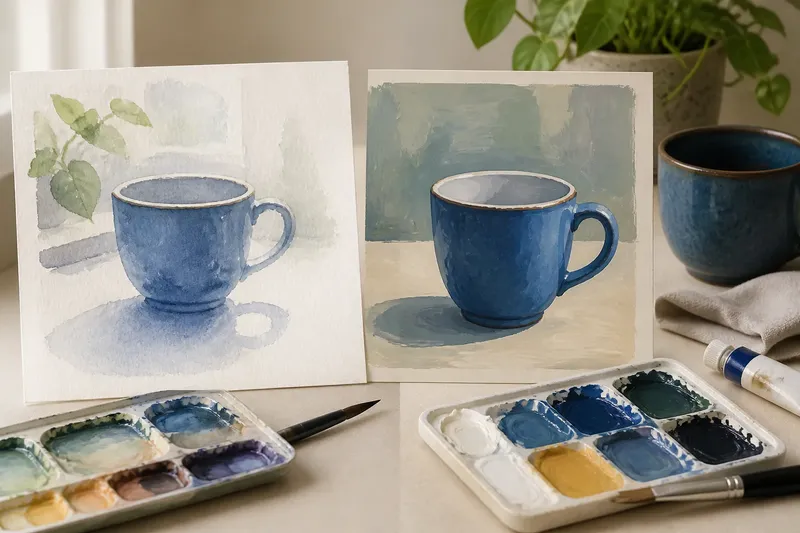
Say you want to make a small study of a blue ceramic cup on a pale table. You decide the light on the table should remain the paper’s white, and the cup’s shadow should be built from transparent layers. Watercolour fits that intention: leave the light area unpainted, establish the cup with a light wash, then deepen its shadow after the first passage dries.
Imagine instead that the cup’s outline feels too wide after you have painted the table behind it. With gouache, you can cover part of the cup with the table color, then repaint the edge and its neighboring shadow. The expected visible result is a narrower silhouette with less of the old contour showing through, though the correction may still need a neighboring passage to make the surface read as one image.
For a first personal study, write down one sentence about what should remain visible: the paper, earlier layers, or revised shapes. That small decision often settles watercolour or gouache more cleanly than choosing by reputation. Keep the study modest enough that the material can answer the question, rather than asking a single sheet to resolve every possible one.